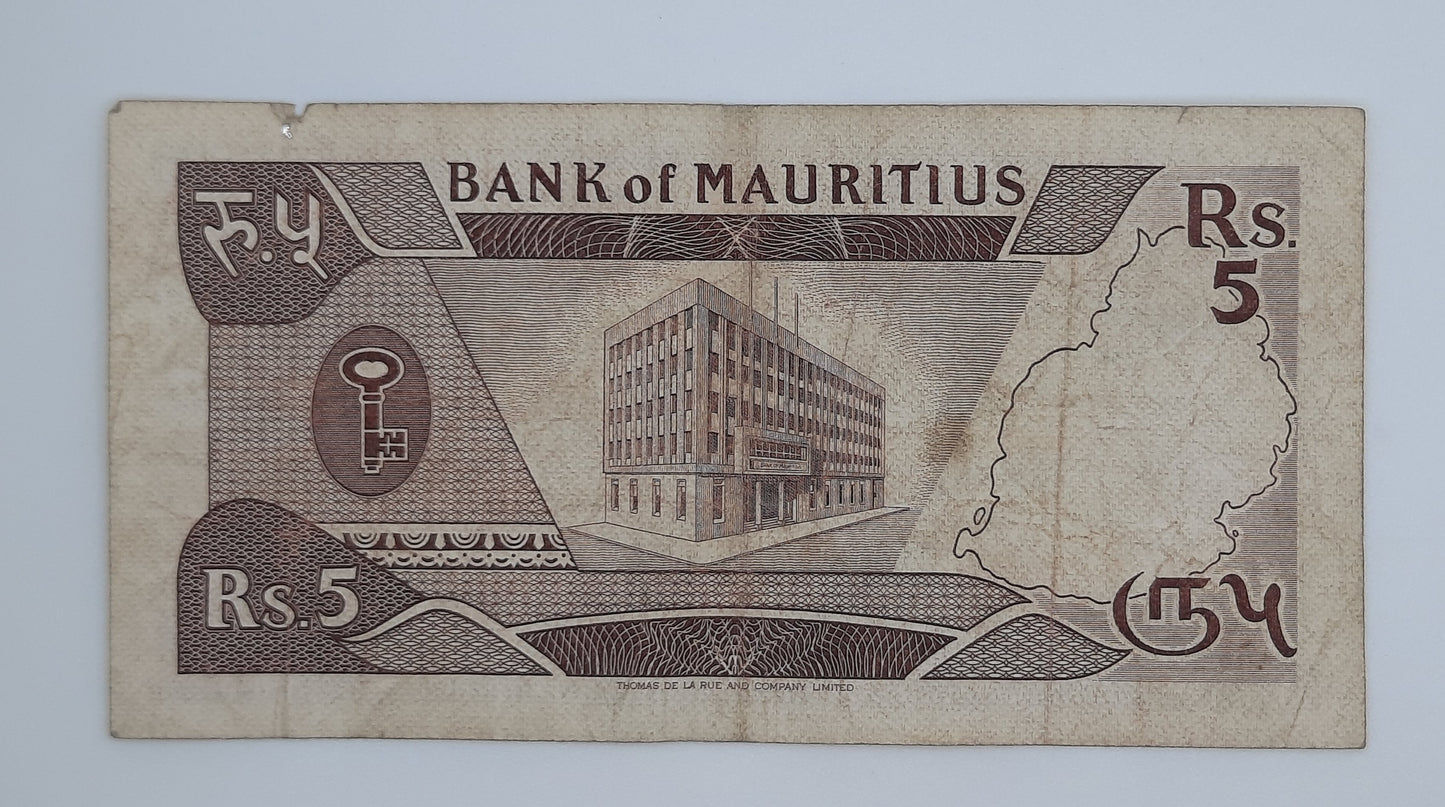
Mauritius 5 Rupees Banknote – Sugar Cane, Coat of Arms & Island Identity (1985 Issue)
Pick# 34 | Numista# 206482
Issued by the Bank of Mauritius in 1985, this 5 Rupees note reflects the island’s agricultural backbone and national symbolism. It highlights sugar cane—the crop that shaped Mauritius’s economy for centuries—alongside the national coat of arms. The reverse features a map of Mauritius, reinforcing geographic identity and pride. Compact yet rich in meaning, this note embodies the island’s blend of heritage and modern statehood.
Design Highlights
Obverse: Printed in red on multicolored underprint, the front depicts sugar cane stalks at left, symbolizing the island’s historic reliance on sugar exports. The coat of arms of Mauritius appears prominently, with bilingual text in English, Tamil, and Devanagari scripts. Serial numbers and official signatures authenticate the issue.
Reverse: The back presents a map of Mauritius, framed by geometric ornamentation. This cartographic motif emphasizes national identity and the island’s distinct place in the Indian Ocean.
Color Scheme: Dominated by red tones, the palette conveys strength and vitality, distinguishing it from higher denominations while remaining visually striking.
Key Specifications
Feature Description
Country Mauritius
Issuer Bank of Mauritius
Series 1985 Issue
Pick Number P# 34
Denomination 5 Rupees
Size 128 × 64 mm
Material Cotton-based paper
Printer De La Rue (UK)
Year of Issue 1985
Security Features Watermark (Dodo bird), solid security thread, UV activity, serial numbers
Languages English, Tamil, Devanagari
Why Collect This Note
The 1985 Mauritius 5 Rupees note is a low-denomination issue that nonetheless carries strong cultural weight. Its imagery of sugar cane and the national arms makes it a tribute to the island’s economic and political foundations. The reverse map adds geographic symbolism, making it a compact yet meaningful collectible.
It appeals to collectors interested in:
Agricultural symbolism in currency design
Island nation cartography on banknotes
Multilingual inscriptions reflecting diverse heritage